

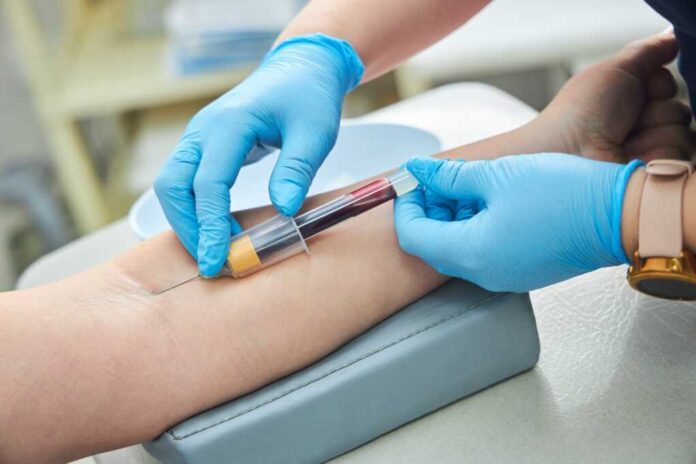
Alzheimer’s isn’t a single road—it’s a crossroads, and for the first time, scientists are mapping four distinct biological pathways that may predict your future with the disease.
Story Snapshot
- Researchers have identified four unique routes that lead to Alzheimer’s, each with its own biological markers.
- New blood-based tests can diagnose and stage Alzheimer’s with over 90% accuracy, no spinal taps or brain scans required.
- The FDA’s approval of the Lumipulse test and the Alzheimer’s Association’s clinical guidelines are pushing blood tests into routine care.
- This seismic shift promises earlier intervention, targeted treatments, and hope for millions facing cognitive decline.
Four Predictable Paths Replace Alzheimer’s Guesswork
Alzheimer’s disease has long haunted aging minds as a mysterious thief, striking seemingly at random. Recent research from international teams, including Washington University School of Medicine and Lund University, upends this narrative. Scientists now trace the disease’s progression along four distinct biological pathways, each defined by specific protein accumulations and neurodegeneration patterns. These findings shatter the myth of randomness and open the door to precision medicine, transforming Alzheimer’s from an enigma into a series of predictable courses that can be intercepted and monitored.
Historically, Alzheimer’s diagnosis required a gauntlet of clinical assessments, costly brain imaging, and invasive spinal fluid analysis. The urgent quest for non-invasive biomarkers has spanned decades, but recent breakthroughs in plasma-based technology are rewriting the playbook. Blood now tells the story: proteins like MTBR-tau243, pTau217, and beta-amyloid can be measured with a simple draw, offering unprecedented accuracy in staging the disease and distinguishing it from other causes of cognitive decline.
The Blood Test Revolution: Diagnosis Without Drills
March 2025 marked a milestone. A Nature Medicine study showed that the MTBR-tau243 blood test could stage Alzheimer’s and differentiate it from other dementias with 92% accuracy. This wasn’t just statistical noise—it was a clinical symphony. By May 2025, the FDA cleared the Lumipulse blood test for amyloid detection, triggering a cascade of adoption. In July, the Alzheimer’s Association released clinical guidelines recommending blood-based biomarker tests for specialized memory care settings. These tests, once relegated to research labs and clinical trials, now stand at the threshold of mainstream medicine, ready to replace invasive and expensive procedures with a few drops of blood.
Alzheimer’s blood tests do more than confirm a diagnosis—they stage the disease’s progression, guiding clinicians to match patients with the most effective therapies. This accuracy means earlier intervention, less diagnostic uncertainty, and a streamlined patient journey. In the words of Dr. Randall J. Bateman, “This blood test clearly identifies Alzheimer’s tau tangles, which is our best biomarker measure of Alzheimer’s symptoms and dementia.” The new guidelines, according to Dr. Maria C. Carrillo of the Alzheimer’s Association, empower clinicians to use these tests “confidently and consistently,” promising better outcomes for patients and families.
Clinical Guidelines and FDA Approval: The Tipping Point
The FDA’s stamp of approval and the Alzheimer’s Association’s clinical guidelines have shifted the power dynamics in Alzheimer’s care. Researchers, clinicians, regulatory bodies, and pharma companies now share a united front in deploying blood-based diagnostics. For patients and families, this means earlier answers, reduced anxiety, and new hope for targeted therapies. Healthcare providers benefit from improved workflow and diagnostic confidence, while insurers eye potential cost savings from less invasive testing.
Economically and socially, the implications are profound. Diagnostic labs and biotech firms stand to gain from increased demand for biomarker tests. Pharmaceutical companies can finally identify eligible patients for new drugs with greater precision. Politically, advocacy for Alzheimer’s research and funding is likely to surge as these advances become more widely recognized. The convergence of accurate blood tests and predictable disease pathways marks a paradigm shift that could redefine how society approaches neurodegenerative diseases.
Expert Consensus, Open Questions, and What’s Next
Industry leaders and academic experts hail these developments as transformative. The Nature Medicine study is cited for its rigorous methods and clear clinical relevance; the Alzheimer’s Association’s guidelines are viewed as a landmark for practice. While most experts agree on the power of blood-based biomarkers, some caution that these tests should complement, not replace, comprehensive diagnostic assessments. The debate continues over which biomarkers best predict progression and how to integrate these tests into everyday care, but the consensus is clear: the future of Alzheimer’s diagnosis is blood-driven, precise, and far less invasive.
For the millions at risk, these advances represent more than scientific triumph—they offer the possibility of earlier intervention, better planning, and reduced stigma. As research continues and real-world data accumulates, the healthcare landscape will likely shift toward biomarker-driven care, with profound effects on patients, providers, and the broader industry. The journey from lost memories to mapped pathways is underway, and the next chapters promise to be written not in shadows, but in the bright clarity of scientific progress.
Sources:
Alzheimer’s Association: Clinical Practice Guideline – Blood-Based Biomarkers
Alzinfo: What to Know About the New Blood Test for Alzheimer’s
Alz.org: FDA Clears Blood Test for Alzheimer’s Diagnosis