

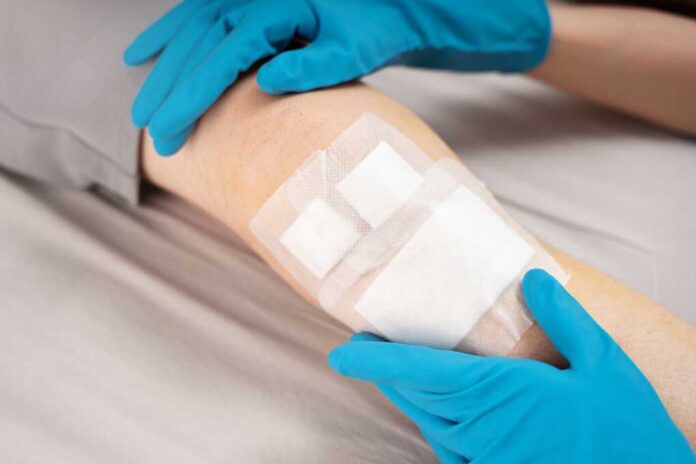
What if the same protein that signals danger in aggressive cancers could also be the secret ingredient for healing wounds that refuse to close?
Story Snapshot
- Scientists have identified SerpinB3, a protein infamous in cancer biology, as a powerful agent in wound healing.
- This discovery shifts the narrative around SerpinB3, revealing its unexpected reparative role in skin regeneration.
- Pairing SerpinB3 with cutting-edge biomaterial dressings accelerates stubborn wound closure.
- The findings could revolutionize chronic wound care and redefine our understanding of cellular repair.
The Double Life of SerpinB3: From Cancer Culprit to Healing Hero
SerpinB3 has long haunted cancer researchers for its sinister association with some of the most aggressive tumors. Yet, recent research has upended this reputation by revealing a paradox: the same protein notorious for driving malignancies also orchestrates the healing of persistent wounds. Scientists discovered that SerpinB3 signals skin cells to migrate and proliferate, a process essential for closing stubborn ulcers and injuries that otherwise resist treatment.
Watch:
In chronic wounds, where healing stalls and tissue breaks down faster than it can rebuild, SerpinB3’s presence acts as a biological green light. By guiding cellular migration and encouraging the construction of new tissue, this protein becomes the unlikely protagonist in a story more nuanced than any single diagnosis or label. Researchers now see a path forward—one that leverages SerpinB3’s complex nature to benefit patients who have waited too long for wounds to finally heal.
Unlocking Wound Healing: The Role of Biomaterial Dressings
Standard wound care often falls short when faced with ulcers, burns, and diabetic wounds that linger for months or even years. The integration of next-generation biomaterial dressings with SerpinB3 marks a pivotal advance. These dressings not only provide a scaffold for tissue growth but also deliver SerpinB3 directly to the cells in need, turbocharging the body’s natural repair mechanisms. The synergy between advanced materials and biological signals represents a fundamental shift in wound management, making healing possible where it once seemed out of reach.
Scientists uncover a surprising protein that heals stubborn wounds https://t.co/FMcxaaJn2L
— Zicutake USA Comment (@Zicutake) November 17, 2025
Rethinking the Boundaries Between Disease and Healing
The SerpinB3 story raises provocative questions about the boundaries we draw between disease and health. Proteins, like people, can play multiple roles depending on context. In cancer, SerpinB3’s ability to promote cell movement and growth is a liability; in wound care, it’s a lifesaver. Could more molecules, previously condemned for their role in disease, be harnessed for healing when properly directed? The implications extend beyond wound care. If the context determines whether a protein is friend or foe, therapies could be tailored with unprecedented precision—turning molecular liabilities into assets.
The Future of Healing: Hope for Chronic Wound Sufferers
Chronic wounds are not just a medical challenge; they are a daily battle for independence and dignity. The discovery of SerpinB3’s reparative powers offers new hope for patients who have cycled through treatments and faced disappointment at every turn. By embracing the complexity of biology and refusing to let old assumptions dictate new possibilities, researchers are charting a future in which stubborn wounds no longer dictate the pace of life. As SerpinB3 moves from the shadows of oncology into the spotlight of regenerative medicine, the medical community is reminded that every villain has the potential for redemption.
Sources:
https://www.news-medical.net/news/20251107/Protein-linked-to-cancer-plays-key-role-in-wound-healing.aspx
https://www.sciencedaily.com/releases/2025/11/251116105631.htm