

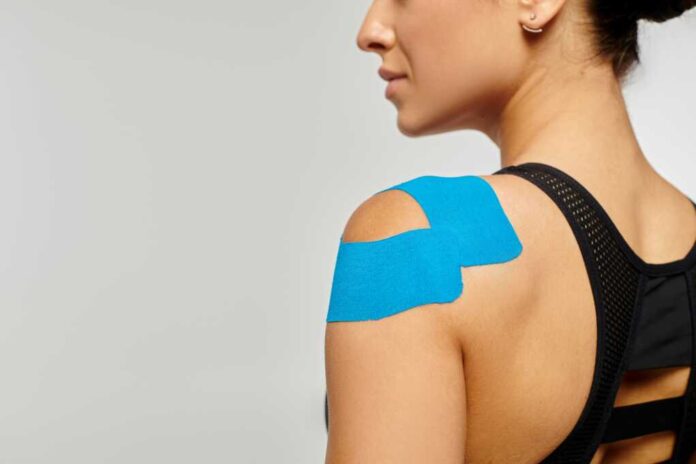
What if the most visible fitness trend of the last decade—those flashy stripes of kinesiology tape—was driven more by psychology than physiology, and the science behind it might just surprise you?
Quick Take
- Kinesiology tape (KT) exploded in popularity after the 2008 Olympics, yet evidence for its workout benefits remains elusive.
- Marketing claims of improved performance and injury prevention often outpace what peer-reviewed research supports.
- Healthcare professionals widely use KT, but many attribute its effects to placebo rather than proven mechanisms.
- KT is generally safe and low-risk, but its scientific support for performance or pain relief is weak and controversial.
The Origins and Global Rise of Kinesiology Tape
Dr. Kenzo Kase invented kinesiology tape in 1970s Japan, seeking an elastic tape that could support muscles and joints without limiting movement. This innovation diverged from the rigid athletic tapes previously favored for injury prevention, as KT was designed to mimic the skin’s flexibility. The tape’s true global breakout came in 2008 at the Beijing Olympics, where elite athletes wore vibrant strips on arms, legs, and torsos. Almost overnight, KT transformed into a fitness fashion statement and a supposed secret weapon for everyday gym-goers. Today, KT’s presence stretches from high school basketball courts to elite marathons, with manufacturers touting a dizzying range of benefits—pain relief, improved circulation, and even performance enhancement. Yet as KT’s visibility soared, so did scrutiny from researchers and clinicians, sparking a debate that still rages in 2025.
https://twitter.com/esgdm/status/1978846730788688241
KT quickly became a symbol of modern sports medicine, bolstered by endorsements from stars and aggressive marketing. Manufacturers like Kinesio Holding Corporation and RockTape fueled demand, handing out samples, crafting tutorials, and leveraging social media to amplify the tape’s mystique. Healthcare professionals—physical therapists, athletic trainers, and sports physicians—adopted KT, sometimes enthusiastically, sometimes skeptically. Their patients, eager for any edge, often arrived already convinced by what they saw on TV or in magazines. Despite the tape’s popularity, leading sports medicine organizations remain cautious: they refrain from outright endorsements due to a lack of robust scientific evidence. Insurance providers rarely cover KT, reflecting its controversial status among medical interventions.
Can This Tape Really Improve Your Workout? https://t.co/JnD1Wk7Ran
— Amy Sheinberg, Ph.D. (@dramysheinberg) October 14, 2025
Scientific Reality: What the Evidence Actually Shows
Systematic reviews and meta-analyses published between 2021 and 2025 consistently show that KT does not provide significant benefits over placebo or no tape for enhancing workout performance, muscle strength, or injury prevention. Most studies find only small, inconsistent effects on pain relief, and these changes are rarely clinically meaningful. Some clinicians believe KT may offer minor improvements in proprioception—body awareness—but the evidence is weak and difficult to replicate. The medical consensus is clear: KT’s physiological effects are limited, and its popularity is fueled more by perception and psychology than by proven science.
The Placebo Effect and Real-World Practice
Placebo power is not a dirty secret in sports medicine—it’s a reality that shapes how interventions like KT are integrated into clinical practice. When an athlete feels more stable, confident, or less pain after applying KT, those feelings can translate to better performance, even if the tape itself is not delivering a direct physiological benefit.
Long-term reliance on KT without strong evidence could divert athletes from more effective interventions, but its low-risk profile means harm is unlikely. The debate over KT echoes broader controversies in sports medicine—how quickly should new products be adopted, and how should clinicians balance patient preference against scientific rigor? For now, KT’s popularity endures, supported by a multi-million dollar industry, eye-catching endorsements, and the subtle but powerful force of belief.
Sources:
PubMed: Kinesiology Tape Review
PMC: KT Use Among Healthcare Professionals
IASP: Is Kinesio Taping Effective?
HSS: Kinesiology Tape Overview
JOSPT: Kinesiology Tape Systematic Review
Cleveland Clinic: KT and Athletic Performance