
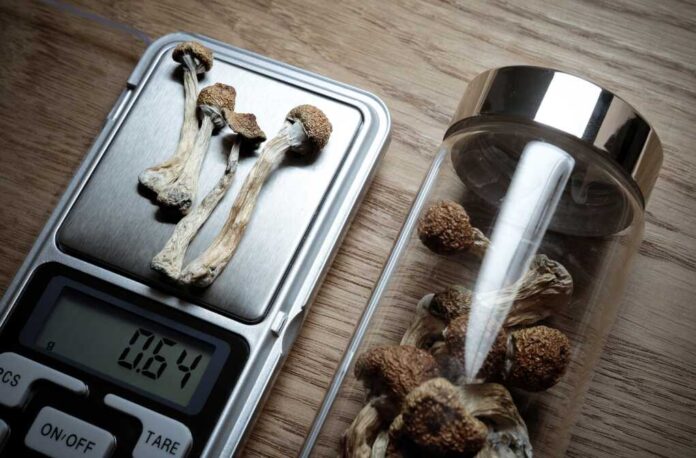
Microdosing mushrooms—a trend once whispered about in Silicon Valley circles—has quietly sparked a surge of calls to poison control centers and emergency rooms, raising far more questions than answers about what’s really behind the “safe” psychedelic craze.
Story Snapshot
- Microdosing mushrooms is now a mainstream fad, not a fringe experiment.
- Poison control centers and ERs are seeing a measurable uptick in related incidents.
- Changing policies and glowing headlines may obscure real risks for unwary users.
- The debate over benefits versus dangers is far from settled, despite the hype.
Microdosing Mania: From Counterculture to Kitchen Table
Microdosing, the practice of consuming tiny, sub-perceptual amounts of psychedelic mushrooms, has leapt from the pages of underground manuals to dining room discussions across the country. As local policies soften and research touts potential mental health benefits, an ever-growing slice of the population is dabbling with psilocybin in hopes of sharpening their minds, boosting moods, or simply keeping up with the Joneses—who now may be microdosing, too. But as this once-taboo ritual gains social acceptance, a less publicized trend is emerging: a sharp rise in calls to poison control centers and hospital visits directly linked to mushroom use.
Reports from poison control centers confirm that mushroom-related calls have spiked, a trend that tracks closely with the uptick in microdosing’s popularity. These are not isolated events. Emergency rooms across urban and suburban America are fielding more cases of accidental overdoses, adverse reactions, and even psychological crises triggered by what many believed were “harmless” doses. While advocates argue these incidents are the result of uneducated or reckless use, the data suggests a more complicated picture—one where misinformation, inconsistent dosing, and a lack of regulatory oversight converge to create unexpected dangers for both new and seasoned users.
The Mirage of Safety: Policy Shifts and Public Perception
Local decriminalization efforts and the drumbeat of positive media coverage have contributed to a widespread perception that microdosing is not only safe but somehow officially sanctioned. This shift in public attitude ignores the fact that psilocybin, the active compound in magic mushrooms, remains a powerful hallucinogen with unpredictable effects, especially when self-administered without medical guidance. As boundaries blur between therapeutic potential and recreational risk, everyday Americans are left navigating a landscape littered with both promise and peril.
The allure of personal transformation—improved creativity, mood stabilization, and even relief from depression—fuels the microdosing movement. Yet, the actual science is still in its infancy. Well-designed clinical trials are rare, clear dosing guidelines are nonexistent, and the booming black market makes consistency nearly impossible. As a result, well-intentioned users often ingest more than intended or mix mushrooms with other substances, leading to the kind of emergencies that now routinely show up in hospital logs and poison control databases.
ER Reality: The Human Cost of a Psychedelic Fad
Emergency physicians describe a spectrum of microdosing mishaps that defy the narrative of safe, mindful consumption. Patients arrive disoriented, panicked, or suffering from severe gastrointestinal distress. Others experience anxiety attacks or temporary psychosis—outcomes far removed from the “mind-expanding” benefits touted on podcasts and wellness blogs. For older adults, those with pre-existing conditions, or anyone taking prescription medications, the risks multiply. Poison control data reveals that many cases involve individuals who believed they were “starting small,” only to discover that even a minuscule amount can have outsized effects, especially with no standardized product or reliable source.
Many users are surprised to learn that the line between a microdose and a full-blown psychedelic experience is razor-thin and easily misjudged. This is especially true when mushrooms come from unregulated suppliers, meaning potency can vary wildly from one batch to the next. The lack of clear labeling or quality control invites mistakes, leaving users vulnerable to adverse reactions that can be both physically and mentally destabilizing.
Looking Ahead: Questions that Demand Answers
The rush to embrace microdosing as a shortcut to happiness or productivity has outpaced the science and public health infrastructure needed to keep people safe. Lawmakers, medical professionals, and would-be users face a crossroads: push for more research, clearer regulations, and honest reporting about both the benefits and the risks, or risk letting another health fad spiral out of control. For now, the statistics tell a cautionary tale—one where curiosity, optimism, and a dash of recklessness collide, sometimes with consequences that linger long after the high fades.
The conversation around microdosing mushrooms is far from over. As policies continue to evolve and new data emerges, the gap between public perception and medical reality may either widen or narrow. What remains clear is that this is not a trend without consequence, and anyone tempted to join the microdosing wave would do well to consider both the promise and the peril—before a call to poison control becomes the wake-up call nobody wanted.
Sources: