

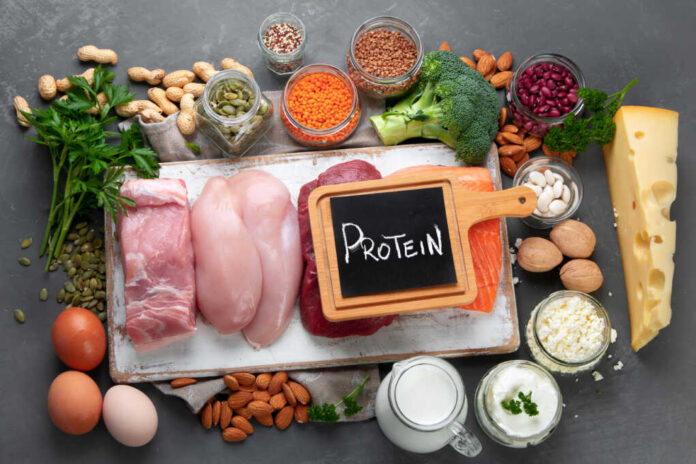
Protein intake is more than just a number; it’s a complex equation influenced by age, activity, and health goals, leaving many to wonder if they’re getting it right.
Story Overview
- Protein needs vary from 0.8-1.7g/kg of body weight.
- Experts warn against excessive protein intake beyond 2g/kg.
- Protein should be evenly distributed throughout the day.
- Focus on whole foods rather than relying on supplements.
The Evolution of Protein Guidelines
Protein recommendations have been a staple of nutritional guidance since the U.S. National Academy of Medicine established the Recommended Dietary Allowance (RDA) in 1943. Initially designed to prevent deficiency, the RDA has evolved over the decades. Currently, sedentary adults are advised to consume 0.8g of protein per kilogram of body weight, equating to 46g for women and 56g for men on a 2,000-calorie diet. Despite this, modern lifestyle changes and fitness trends have sparked debates about the adequacy of these guidelines.
In response to these trends, experts recommend tailored protein intake for different demographics. For athletes, the suggested intake increases to 1.2-1.7g/kg to promote muscle repair and growth. Meanwhile, aging adults face challenges like sarcopenia, prompting recommendations of 1-1.2g/kg to maintain muscle mass. Women, particularly those undergoing hormonal changes, may benefit from 1.4-2.2g/kg.
Watch:
Protein Myths and Realities
The fitness industry often promotes high protein diets, but experts like those at the Mayo Clinic and the American Heart Association advise moderation. Excessive protein consumption, particularly over 2g/kg, can strain kidneys and offer no additional benefits. Instead, a balanced distribution of protein intake throughout the day is emphasized. Meals should ideally contain 15-40g of protein to optimize muscle synthesis and overall health.
The hype surrounding protein supplements has also been scrutinized. While the supplement industry continues to grow, with an estimated market value exceeding $20 billion by 2025, health authorities stress the importance of whole foods. Foods like beans and lean meats not only provide protein but also offer essential nutrients without the added sugars found in many protein powders. Got a health question? Ask our AI doctor instantly, it’s free.
Expert Opinions and Consensus
Experts generally agree on the basic guidelines for protein intake, though there are nuances based on specific needs. The consensus supports the RDA of 0.8g/kg as a minimum for sedentary individuals, scaling up to 1.2-1.7g/kg for those who are more active. For women, particularly during menopause, recommendations can reach up to 2.2g/kg. Dr. Stacy Sims, for instance, advocates for higher intake for women to counter hormonal fluctuations.
How Much Protein Do You Need in a Day? We Consulted the World's Smartest Protein Experts. 🔗 https://t.co/E76DsrTm95
— The Kings Ark™ (@thekingsark) December 12, 2025
Researchers also highlight that plant-based and animal-based proteins can be equally effective if the total protein intake meets individual needs. This perspective encourages a diverse diet that supports cardiovascular health and aligns with American Heart Association guidelines. Start your health journey in under a minute.
Practical Implications and Future Directions
The implications of these guidelines extend beyond individual health to economic and social spheres. As public awareness grows, there’s a shift from protein supplements to whole foods. This shift not only impacts consumer behavior but also influences policies, such as school lunch programs guided by the USDA. The fitness industry is also adapting, focusing on messages of “optimal” rather than excessive protein intake.
Long-term adherence to these guidelines can prevent muscle loss, particularly in older adults, and support heart health through balanced diets. However, education remains critical to dispelling myths and promoting informed choices about protein consumption. As the conversation around protein continues to evolve, it remains clear that moderation and balance are key.
Your instant doctor companion – online 24 hours a day.
Sources:
Mayo Clinic Health System
American Heart Association
Houston Methodist
KUMC News Archive
Dr. Stacy Sims
Mass General Brigham
Dietary Guidelines for Americans 2020-2025
Tufts Now