

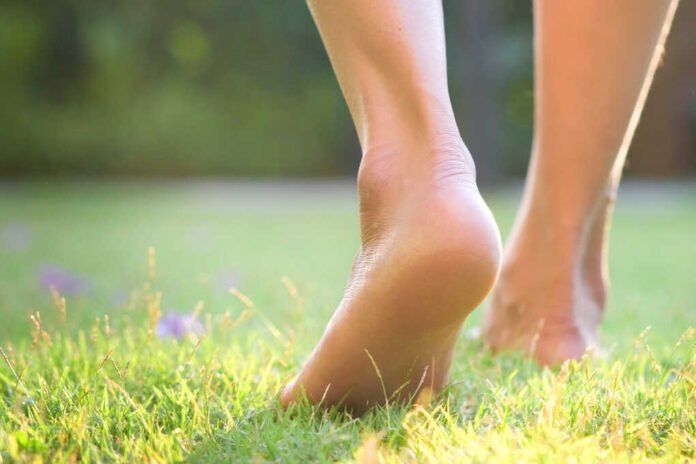
If you’ve been shuffling through life believing 10,000 steps a day is your ticket to eternal youth, buckle up: the real magic number is less—and your knees might just throw you a thank-you party.
At a Glance
- The 10,000-step rule was invented as a marketing gimmick, not a health mandate.
- New research pegs the sweet spot for health benefits between 8,000 and 10,000 steps a day.
- Walking fewer than 10,000 steps still brings powerful health gains, especially for older adults.
- Fitness trackers and public health guidelines are finally catching up with the science.
The 10,000-Step Saga: Fact, Fiction, and Footsteps
Picture it: Japan, 1965. A clever pedometer marketer coins “10,000 steps” as the gold standard for daily movement—because the Japanese character for 10,000 looks like a person walking. No, seriously. This arbitrary number circled the globe faster than a marathon runner on Red Bull, morphing into a modern fitness mantra. For decades, people trudged through shopping malls, airports, and suburban cul-de-sacs, worshipping at the altar of the step counter, all chasing an invented finish line. But the real story? Scientists have been quietly poking holes in the myth, determined to put the “fun” (and some reality) back into functional fitness.
Step counters became wrist royalty as wearable fitness trackers exploded. Health agencies and tech giants alike pushed 10,000 steps as the non-negotiable daily dose. Yet, beneath the surface, epidemiologists and public health pros were side-eyeing that number, muttering, “Says who?” Spoiler: It didn’t come from them. Now, thanks to a parade of studies and some statistical elbow grease, the truth is trudging into daylight—one step at a time.
The Real Numbers: Science, Sweat, and Sanity
According to heavyweight research teams from Central South University and Yale, the optimal step count for health and longevity falls between 8,000 and 10,000 per day. Not 10,001. Not infinity. Somewhere between “I parked at the back of the lot” and “I wandered the Louvre three times.” The big reveal? Health benefits ramp up quickly until you hit that 8,000–10,000 range, then plateau. In fact, above 8,250 steps, there’s little extra survival bump, and heart health peaks around 9,700. Translation: You can skip the midnight living room laps to squeeze out that last thousand unless you’re hiding from in-laws.
Harvard’s Dr. I-Min Lee, the research world’s myth-busting champion, found that older women got the same survival perks at 7,500 steps as at 10,000. Meanwhile, a bombshell 2023 study showed that even hitting 8,000 steps just a couple days a week slashed mortality risk by nearly 15% over a decade. Public health guidelines are quietly rewriting themselves, bending to the will of actual data instead of marketing slogans.
Who Wins, Who Walks, and Who Profits?
This step-count shakeup doesn’t just matter to your feet. The new science reroutes the entire fitness-industrial complex. Researchers and academic experts like Dr. Howard Luks and Dr. I-Min Lee are calling for more realistic, more personalized goals. Health organizations such as the American Diabetes Association and American Psychological Association are putting out the word that even moderate, consistent walking—think 30 minutes, five times a week—can slash your risk for diabetes and depression. Fitness tech companies, who built empires on the 10,000-step badge, will need to recalibrate their marketing, lest they get left in the dust by step-skeptical consumers.
For the average Jane and Joe, this is liberating news. Walking is now officially endorsed as the people’s exercise: easy, free, and achievable. If you’re 70 and prefer strolling to sprinting, you’re in good company. And if you’re one of the millions who never once saw 10,000 on your tracker and felt like a failure, science just handed you a permission slip to celebrate every step—no guilt, no shame, no unnecessary laps around the kitchen counter.
Long-Term Impact: More Steps, Less Stress, Better Everything
The implications ripple out far beyond your daily Fitbit readout. In the short term, expect more folks to lace up those sneakers, motivated by goals that feel doable and not like torture disguised as cardio. Over time, this could mean fewer chronic diseases, lower healthcare costs, and communities designed for people, not just cars. The message is clear: any movement is better than sitting, and more steps—up to that 8,000–10,000 range—deliver real, lasting benefits. Insurance companies, wellness programs, and public health agencies are likely to adjust their benchmarks, and you can bet your bottom dollar that the next wave of fitness tech will come with new, evidence-based defaults.
Experts agree: set your sights on 8,000–10,000 steps if you can, but don’t sweat it if life gets in the way. The sweet spot for a longer, healthier life is both lower and more flexible than the old rules. If you’re getting anywhere between 3,800 and 7,000 steps, you’re still banking serious benefits. So put down the guilt, grab some comfy shoes, and walk like you mean it—because now, you know better.