

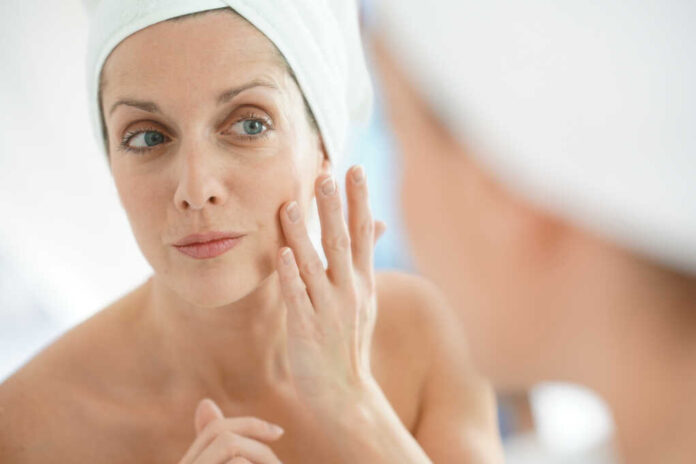
Your skin’s needs change dramatically after 40, but with the right approach, you can maintain radiant, healthy skin while addressing common age-related concerns like dryness, fine lines, and reduced elasticity.
At a Glance
- Skincare routines should evolve after 40 to address hormonal changes that decrease collagen and increase dryness
- Daily SPF use remains the most important anti-aging step, protecting against both UVA and UVB rays
- Key ingredients for aging skin include vitamin C (for brightening and collagen), retinol (for cell turnover), and hydrating components
- Don’t forget the neck and hands—these areas often show aging first and benefit from the same treatments as your face
- Simpler routines are often more effective—focus on quality products with proven ingredients rather than complicated steps
Understanding Skin Changes After 40
When women reach their 40s, significant skin changes occur due primarily to hormonal shifts. Estrogen levels begin declining during perimenopause, leading to noticeable differences in skin texture, elasticity, and moisture retention. Collagen production decreases dramatically, causing skin to become thinner and more prone to fine lines. The skin’s natural moisture barrier weakens, resulting in increased dryness and sensitivity that your previous skincare routine may not adequately address.
Essential Ingredients for Aging Skin
A targeted skincare routine for women over 40 should prioritize specific ingredients proven to address age-related concerns. Vitamin C stands out as a powerful antioxidant that brightens skin, fights free radical damage, and supports collagen production. Apply it in the morning under sunscreen for maximum protection. Retinol or prescription retinoids remain the gold standard for stimulating cell turnover, reducing fine lines, and improving texture, though they should be introduced gradually to avoid irritation.
Hydration becomes increasingly crucial as natural moisture levels decline. Look for products containing hyaluronic acid, which can hold up to 1,000 times its weight in water, drawing moisture into the skin. Peptides help signal collagen production, while niacinamide reduces inflammation and supports the skin barrier. For extremely dry skin, incorporating facial oils like squalane, rosehip, or argan oil can help lock in moisture and improve resilience.
Simplifying Your Routine
Despite what beauty marketing might suggest, a simpler approach often yields better results for mature skin. Focus on quality over quantity with a basic framework: gentle cleanser, antioxidant serum, moisturizer, and sunscreen during the day, with retinol incorporated at night. This foundation addresses most concerns without overwhelming sensitive skin or creating product conflicts. Avoid the temptation to layer multiple active ingredients, which can increase irritation without providing additional benefits.
**BIG CONGRATULATIONS TO THE IRAN COMMUNITY!**
We are very fortunate to have Mr. Kiavash Kamrraniyan as our esteemed Global GCV Ambassador, who is also a member of the Global GCV CT Committee. He serves as the Head of the Iran GCV Ambassadors.🙏🙏🙏
Thanks to his hard work and… pic.twitter.com/bL7RzaeQfr
— Doris Yin 东方紫莲🪷 (@dorisyincpa) February 8, 2025
Beyond the Face: Comprehensive Aging Care
Many women diligently care for their facial skin while neglecting areas that often show aging first—particularly the neck, décolletage, and hands. These regions have thinner skin with fewer oil glands and are frequently exposed to the same environmental stressors as the face. Extend your skincare treatments to these areas, applying the same serums, moisturizers, and sunscreens to maintain consistency throughout visible skin zones. Hand creams with antioxidants and SPF provide additional protection for this high-exposure area.
Sun Protection Remains Non-Negotiable
While adding targeted treatments for aging skin is important, nothing surpasses the protective power of daily sunscreen. UV exposure remains the primary driver of premature aging, causing an estimated 90% of visible skin aging. Even brief, incidental exposure adds up over time, breaking down collagen and elastin while promoting hyperpigmentation. Choose a broad-spectrum SPF 30 or higher and reapply throughout the day, especially when outdoors. Remember that sun damage accumulates over decades—protection now prevents further damage.
Lifestyle Factors for Healthy Aging
External skincare only addresses part of the aging equation. Internal factors significantly impact skin health, including diet, sleep quality, stress management, and hydration levels. Focus on incorporating antioxidant-rich foods like berries, leafy greens, and fatty fish that provide skin-supporting nutrients. Adequate sleep allows for cellular repair and renewal, while chronic stress triggers inflammation that accelerates aging. Prioritize consistent hydration by drinking sufficient water throughout the day to maintain skin plumpness and function.